
November 2012 Newsletter - More Tales from Teaching in China

More Tales from China
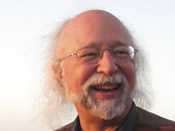 by Steven Forrest
The very day the progressed Moon hit my ninth house cusp, I flew back to China. That was October 13. As the symbolism suggested, I was ready for another big cross-cultural adventure. This time, I was not offered any frogs to eat – a mercy! But I certainly felt stretched, both in terms of my mythic horizons and my waistline. I’m not ready to face discussing the latter, so in this newsletter I will focus on my mythic horizons.
When the Moon is New
 Watching the progressed Moon chase the Sun around the chart is slow business. When the two bodies align, everything changes. The experience is like death and rebirth. Logic fails. The only successful way through it is to follow your heart, but suddenly your heart is speaking an unfamiliar language. Everyone who lives a normal life span will experience this passage at least a couple of times. Here is how to be ready for it.
I taught big two weekend classes in Beijing under the able guidance of Felicia Jiang and David Railey of No Door Productions. My translator, Xinxin, was profoundly able, and everything went swimmingly. There are cultural differences between America and China, for sure. But mostly what strikes me is our common humanity. I was concerned that my work might be incomprehensible to Chinese people simply because our cultures are so different. No worry there – they, like us, are baffled by their relationships, laugh easily, hug each other a lot, and complain about the government. I went there expecting fear, control, and a certain rigidity, and found that I was completely wrong on all counts. In those senses, being in China was no more a ninth house experience for me than being in Peoria, Illinois. Human beings are human beings.
But there were some eye-opening moments too.
First, a silly one – but one that is emblematic of all ninth house leaps over cultural divides. I would approach a door while walking with a woman. As a card-carrying member of Western civilization, I had an instinct to slow down and gallantly allow the woman to pass through the door ahead of me. Trouble is, the Chinese women had the opposite instinct. I think it was not about my being male, but rather about my being older. So there were many awkward moments of, “No, please, you first” . . . “No, you” . . . “No, I insist . . .” But my female Chinese friends soon caught on to the joke. Every time we approached a door, it became a hilarious mock battle. Sometimes I “won,” and sometimes I lost. But my stomach clenched a little every time I “arrogantly” walked ahead of a female, as if I were caught picking my nose or observed with a critical zipper open. Cultural assumptions sink deep into your bones. You stop thinking about them, take them for granted. And they can blind you.
 Underlying all that door-drama was a real cultural divide, and one whose implications I am still digesting: I had a heck of a time getting used to being treated as an elder. I am 63, but like most Americans, I am not preoccupied with role-expectations based on that number. I guess I would say that most of the time I am just being myself and not thinking about my age. “Life has a long middle” is one my favorite expressions. And yet in China, I was seen as . . . well, what I actually am: an older guy. One woman wouldn’t even let me walk anywhere without shepherding me a bit by my elbow, as if I were some pretzel-boned octogenarian. I caught myself being annoyed at her. I’d childishly (and stupidly) scramble ahead of her over broken stone steps at The Great Wall just to prove myself. I was lucky I didn’t fall down and break my leg – and totally vindicate her view of me!
Being perceived as an elder was one manifestation of my getting my ninth house “myth stretched.” I didn’t believe I had issues around aging. I feel comfortable in my skin. But being seen as what I actually am has me thinking. Like feeling that I should go through a door after a woman, there is much that I just simply assume to be true and natural – until someone from another world invites me to stand outside it. Not wanting to be seen through the lens of my chronological age is a fine example of that. Why shouldn’t I be seen that way?
All of that got conflated with my being a teacher, especially one teaching about spiritual matters. The guru projection is an occupational hazard in what spiritually-oriented astrologers do even here in America. It feels stronger in China, and it interacts vigorously with the elder-projections.
The philosophical batholith of all my astrological teaching is essentially Buddhism, with perhaps a twist of Jungian psychology. Buddhism drifted into China over two thousand years ago. It remains alive and well today, and, unlike America, it is very much integrated into the culture. They have a long tradition of spiritual teachers who are, of course, often older males. So why was I surprised that I was treated like a lama? I am not one! But I am “an old man” sitting on the high chair in front of a group of mostly younger people, all the while teaching dharma in astrological language. Why should I have been surprised?
In America, where we are relatively unburdened by any such formal tradition of teachers, I can sit easily in the role of the “old hippie who’s into astrology,” poking fun at myself. But in China, I might as well have had “Call Me Guru” pasted on my forehead.
Pray God I never let myself fall into that prideful death-trap!
 But while wrestling with this projection there in Beijing I remembered another ninth house experience I had many years ago. I was visiting a place in Michigan where a Tibetan lama was scheduled to teach in two days time. A tall throne had been erected for him, complete with gold brocade coverings. I remember thinking, “Who the heck does this guy think he is?” As an American, I was resistant to the pomp and circumstance, and imagined the lama to be an egomaniac. When he arrived, he was utterly humble, unpretentious and human. But when he ascended that throne, he was transformed. He was the embodiment of spiritual authority. I realized that the throne was not for him; it was for the ancient teachings for which he was a transitory vessel.
There, on my own “throne” in China, I found myself elastic. I was fitting myself to an irresistible and benign force – the shape of another cultural projection. I was trying to be worthy of it. Honoring myself was not the point. Rather, China helped me better to honor the sacred teachings for which I am a transitory, imperfect vessel.
China also helped me realize that while I may not be a worthy elder, I sure am older than most people I meet, so it looks like I am elected! People need elders. I needed them myself when I was younger, and I still appreciate them now. All I can do is to try to do my best. To rise to the expectations. To carry the teachings with dignity and respect.
This is the gift of my ninth house progressed Moon, the gift that my Chinese students and friends have given me. I am grateful. I can think of no single geopolitical question more pivotal to the human future than there being friendship between China and America. I am happy to play a little role in that. I will return for my third visit there next October. My Moon will still be in the ninth house, and all I can anticipate . . . is the unanticipated. May I be sufficiently free of my “inner expert” to see it.
– Steven Forrest
The Moon Through the 12 Signs

Taking care of the Moon in ourselves is the same as taking care of our hearts and souls. Boil it down to its bones, and you have the secret of happiness. But unraveling the Moon’s guiding message requires that we release ourselves from the structures of reason and instead learn to how to hear this mysterious, non-linear Lunar language. “Being in touch with our feelings” is part of it, but only one part. Creativity, dreams, intuition, healing (and being healed) — these are all lunar topics too. The Moon is deeply related to “family” in every sense of the word, along with “the Mother,” both literally and archetypally.
In this in-depth instructional video, master astrologer Steven Forrest introduces the dynamic, multi-dimensional nature of the Moon, then explores how it functions in each one of the twelves signs of the Zodiac.